
Robotic surgery is one of the most talked-about advances in modern surgical care, but many patients are still not entirely sure what it actually means. Some assume a robot is performing the surgery on its own. Others hear the term and think it is simply a more complicated version of laparoscopic surgery. In reality, robotic surgery is best understood as a highly advanced tool that allows a surgeon to operate with greater precision, control, and visibility in certain procedures.
The most important thing to understand is this: the robot is not doing the surgery. The surgeon is.
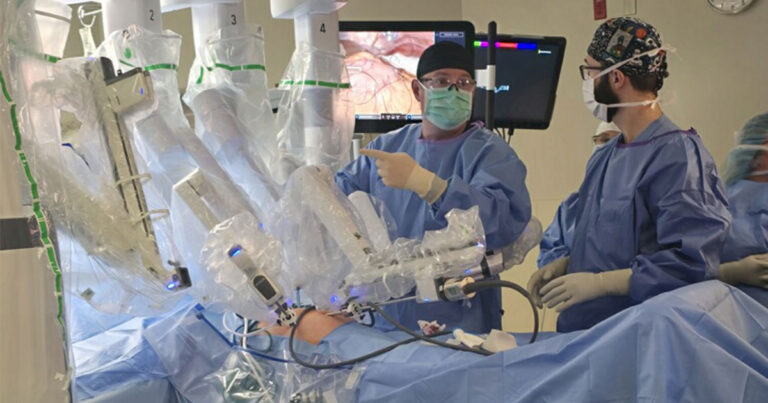
Robotic surgery is a form of minimally invasive surgery in which the surgeon controls specialized instruments from a console while viewing the surgical area in a magnified, three-dimensional image. Every movement is guided by the surgeon’s hands, judgment, and experience. The technology does not replace the surgeon. It simply provides a more refined way to perform certain operations when appropriate.
What makes robotic surgery different
One of the biggest advantages of robotic surgery is the level of precision it can offer. The instruments are designed to move in ways that allow for fine control, especially in smaller or more delicate spaces inside the body. The enhanced visualization also gives the surgeon a clearer view of the operative area than is often possible with the naked eye alone.
Because robotic surgery is typically performed through smaller incisions, it often falls under the broader category of minimally invasive surgery. Depending on the procedure and the patient, that may mean less disruption to surrounding tissue and a smoother recovery experience compared to traditional open surgery.
That said, robotic surgery is not automatically the best option for every person or every condition. In some situations, a different surgical approach may be more appropriate. The goal should never be to use a certain technology just because it is available. The goal should always be to choose the safest and most effective approach for the patient.
Why surgeon experience matters so much
This is where robotic surgery is often misunderstood.
Patients may hear “robotic surgery” and assume the technology itself is what guarantees a better result. But robotic surgery is only as effective as the surgeon using it. The system is a tool, and like any tool, it depends entirely on the skill, training, and judgment of the person behind it.
An experienced surgeon understands not only how to use robotic technology, but when it truly makes sense to use it. That decision matters just as much as the operation itself.
At SABP’s Center for Robotic & Metabolic Surgery, Dr. Donald Fridley uses minimally invasive and robotic techniques when appropriate, helping patients benefit from both advanced technology and thoughtful surgical decision-making.
This is especially important in abdominal, digestive, bariatric, and general surgical procedures, where factors like prior surgeries, scar tissue, inflammation, anatomy, and overall health can make a case more complex than it first appears. In those situations, experience is what helps a surgeon adapt, make sound decisions, and keep the procedure focused on what is best for the patient.
A good surgeon is not simply asking whether a procedure can be done robotically. They are asking whether it should be.
The decision-making before surgery matters too
When people think about surgery, they often focus on what happens in the operating room. But some of the most important parts of surgical care happen well before surgery is ever scheduled.
A thoughtful surgeon does more than explain a procedure. They first determine whether surgery is actually the right next step, whether robotic assistance offers a meaningful advantage, and whether another approach may better fit the patient’s needs and long-term outcome.
That level of judgment is what patients should want.
For example, someone dealing with reflux may need more evaluation before surgery is even considered. A patient with abdominal pain may need testing to determine whether the gallbladder, a hernia, scar tissue, or another issue is actually causing the problem. A patient considering bariatric surgery may need a very different conversation centered around candidacy, health risks, and long-term goals.
In every case, the technology matters less than the experience guiding the plan.
Robotic surgery can be used in many types of procedures
Robotic-assisted surgery may be used in a variety of procedures depending on the diagnosis and the patient’s needs. This can include surgeries related to hernias, gallbladder disease, reflux, and bariatric care, among others.
That does not mean every patient should have robotic surgery, and it does not mean one surgical approach is always better than another. The best plan is always individualized.
This is one reason it is important not to compare your surgery to someone else’s experience. What was appropriate for one person may not be the best fit for another. Surgical decisions should always be based on the condition being treated, the patient’s health, and the surgeon’s clinical judgment.
What patients should take away from all of this
If robotic surgery is part of the conversation, it is completely reasonable to ask questions. Patients should feel comfortable asking why a certain approach is being recommended, what the expected benefits are, and what recovery may look like.
You do not need to understand every technical detail in order to make a good decision. What matters most is having a clear explanation, a thoughtful plan, and confidence in the surgeon guiding your care.
Robotic surgery can be an excellent option when used appropriately, but the true value is not just in the technology. It is in the experience, judgment, and skill behind it.
At the end of the day, patients are not simply looking for the newest tool. They are looking for safe, effective care and a surgeon they can trust. That is what makes the biggest difference.

Our facility is one of the few Centers of Excellence in Bariatric Surgery in the region.
Scheduling a consultation is the next step toward your new life!
We are here to help.

Get monthly nutritional tips, healthy recipes, support, exclusive events, and more!