
Occasional heartburn is something many people experience from time to time. It might show up after a heavy meal, late-night eating, or certain trigger foods. For some, it passes quickly and does not return often enough to cause concern. For others, acid reflux becomes more frequent, more uncomfortable, and harder to manage. When symptoms begin to interfere with daily life or do not respond well to medication, it may be time to look more closely at what is happening.
Understanding when reflux has progressed beyond occasional discomfort can help determine when further evaluation—and in some cases, surgical treatment—may be appropriate.
What GERD actually is
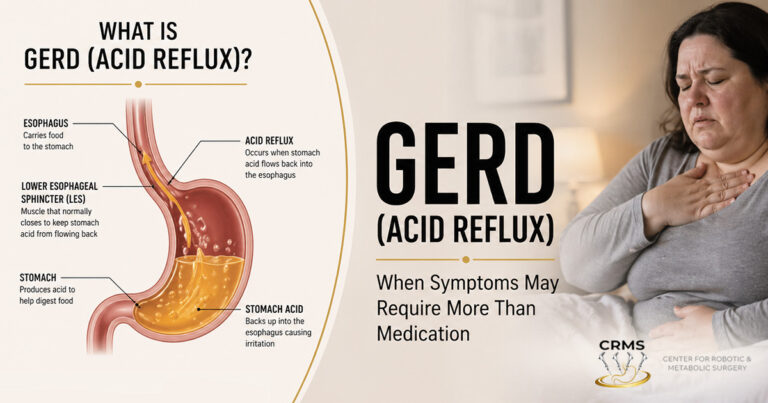
Gastroesophageal reflux disease, or GERD, occurs when stomach acid repeatedly flows back into the esophagus. This happens when the lower esophageal sphincter, the muscle that normally keeps stomach contents from moving upward, is not functioning as effectively as it should. When this barrier weakens or relaxes inappropriately, acid can irritate the lining of the esophagus. Over time, repeated exposure can lead to inflammation, discomfort, and additional complications if not properly managed. GERD is more than occasional heartburn. It is a chronic condition that can vary in severity from mild irritation to more persistent and disruptive symptoms.
Symptoms that go beyond occasional heartburn
Many people recognize GERD through the familiar burning sensation in the chest, often after eating. However, reflux can present in several different ways. Some individuals experience regurgitation, where food or sour liquid seems to come back up into the throat. Others may notice a chronic cough, a hoarse voice, or a persistent need to clear their throat. Difficulty swallowing or the sensation of food getting stuck can also be associated with more advanced irritation. Symptoms may be worse when lying down, bending over, or after larger meals. Over time, what once felt occasional may begin to occur more regularly.
When medication is no longer enough
For many patients, GERD can be managed with lifestyle changes and medications such as antacids or acid-reducing drugs. These treatments are often effective in reducing symptoms and improving comfort. There are situations, however, where medication becomes less effective or is needed long-term without providing consistent relief.
Some patients find that symptoms return quickly when medication is stopped. Others continue to experience discomfort despite taking medication as directed. In these cases, the focus may shift from simply managing symptoms to identifying and correcting the underlying issue. This is often when surgical options begin to enter the conversation.
The role of hiatal hernias
In some patients, reflux is closely related to a condition known as a hiatal hernia. This occurs when a portion of the stomach pushes upward through the diaphragm, affecting how the lower esophageal sphincter functions. A hiatal hernia can make reflux more difficult to control and may contribute to persistent symptoms. Identifying whether a hernia is present is an important part of evaluating GERD and determining the most appropriate treatment plan.
When surgery may be considered
Surgery for GERD is not the first step for most patients. It is typically considered when symptoms are persistent, difficult to control, or affecting quality of life despite appropriate medical treatment. It may also be discussed when there is concern about long-term complications from ongoing acid exposure, such as inflammation of the esophagus or changes in its lining. Surgical treatment is designed to strengthen the barrier between the stomach and esophagus, helping prevent acid from flowing backward. In some cases, this may involve repairing a hiatal hernia at the same time.
At Surgical Associates of Bayonet Point, Dr. Donald Fridley evaluates GERD with a focus on understanding both the severity of symptoms and the underlying cause. The goal is not simply to treat reflux, but to determine whether surgical intervention offers a meaningful benefit for the individual patient.
What evaluation may involve
Before considering surgery, a thorough evaluation is usually recommended. This may include imaging studies, endoscopy, or other diagnostic tests to assess how the esophagus and stomach are functioning. These tests help confirm the diagnosis, identify contributing factors such as a hiatal hernia, and guide treatment decisions. This step is important because not all reflux symptoms are caused by the same issue, and the best treatment plan depends on understanding what is actually happening.
Living with untreated GERD
Chronic reflux is not just uncomfortable. Over time, it can affect the lining of the esophagus and lead to more significant issues if left untreated. Persistent irritation may result in inflammation, scarring, or narrowing of the esophagus. In some cases, long-term reflux can lead to changes in the cells lining the esophagus, which may require ongoing monitoring. Addressing GERD early, whether through lifestyle changes, medication, or further evaluation, can help reduce the risk of these complications.
Knowing when to take the next step
Many people live with reflux longer than they need to, assuming it is something they simply have to manage on their own. While occasional heartburn may not require extensive treatment, ongoing or worsening symptoms deserve attention. If you are relying on medication every day, experiencing symptoms that interfere with sleep or daily activity, or noticing that reflux is becoming more frequent or severe, it may be time to consider a more thorough evaluation.
Understanding your options can provide clarity and help determine whether continued medical management or a surgical approach is the better path forward.

Our facility is one of the few Centers of Excellence in Bariatric Surgery in the region.


Scheduling a consultation is the next step toward your new life!
We are here to help.

Get monthly nutritional tips, healthy recipes, support, exclusive events, and more!